
Developmental language delay (DLD) is a neurodevelopmental disorder that impacts the way people use and understand language.
DLD can involve a range of difficulty in different areas. People with DLD can have trouble understanding what others say.
They can have issues with expressing their own thoughts and ideas. Even learning new words or putting sentences together can be hard for people with DLD.
While you may have not heard of Developmental language delay, it is more common than people think. 1 in 14 kindergarten children are affected by DLD, which is roughly 7% of the population. This equates to nearly 2 children in every classroom.
Its important to note that DLD is not caused by low intelligence. DLD is also not associated with hearing loss and cannot be explained by other conditions like autism or dyslexia.
It’s also important to mention that it often persists into adolescence if not supported
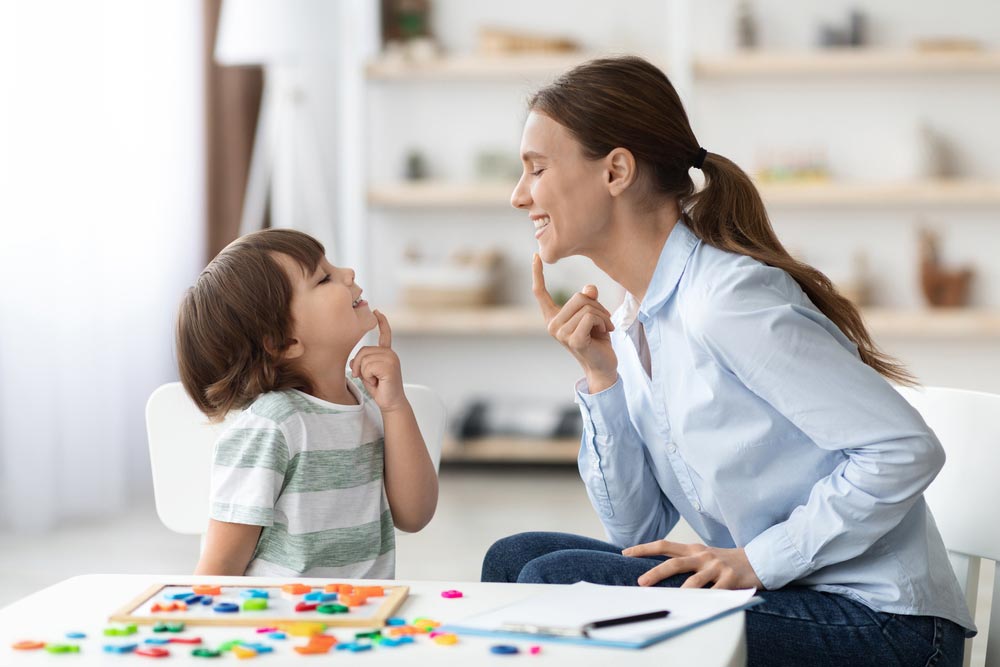
It is extremely important for a child to see a speech pathologist if they struggle with DLD. A speech pathologist will help develop their language skills and confidence when it comes to communicating.
What are the signs my child may have a language delay?
Understanding language
– Having trouble following instructions
– Often needs information repeated
– Seems to not understand questions
Talking and expressing ideas
– Struggles to put sentences together
– Uses simple language
– Uses fewer words than other children their age
Learning and play
– Struggles with rhymes, songs or early literacy skills
– May prefer playing alone due to communication challenges
– Difficulty learning new words
Social communication
– Finds it hard to join conversations
– Has difficulty telling stories or explaining things
– May avoid talking or getting frustrated when trying to communicate
What can I do to help my child’s language?
Early intervention is the most effective way to manage Developmental Language Disorder (DLD).
Our speech pathologists work with students to help them develop their language skills and communication confidence, to help in social or school environments.
First our speech pathologists will assess how your child expresses themselves through their words, stories and how they string together sentences. Then they will look at how your child understands language such as answering questions or how closely they follow instructions.
Our experts can then diagnose the condition through different assessments and build a specific plan to suit their individual goals.
A speech pathologist helps your child build a larger vocabulary and use longer, clearer sentences. We also focus on improving their understanding of questions and developing the social skills needed for the playground.
Because every child is different therapy is tailored to your child’s individual needs and can be managed to suit how your child is progressing.
For younger children our sessions are entirely play based and built around their personal interests. Using toys and games makes the hard work of language learning feel natural, engaging and fun.
We also work as a team with parents and caregivers to provide practical strategies for the home. Our goal is to give you the confidence to support your child’s language development during everyday routines like bath time or grocery shopping.
Strong language skills are the foundation doing well at school and building meaningful friendships that can last a lifetime.