
The Importance of Speech Therapy for Receptive Language Development
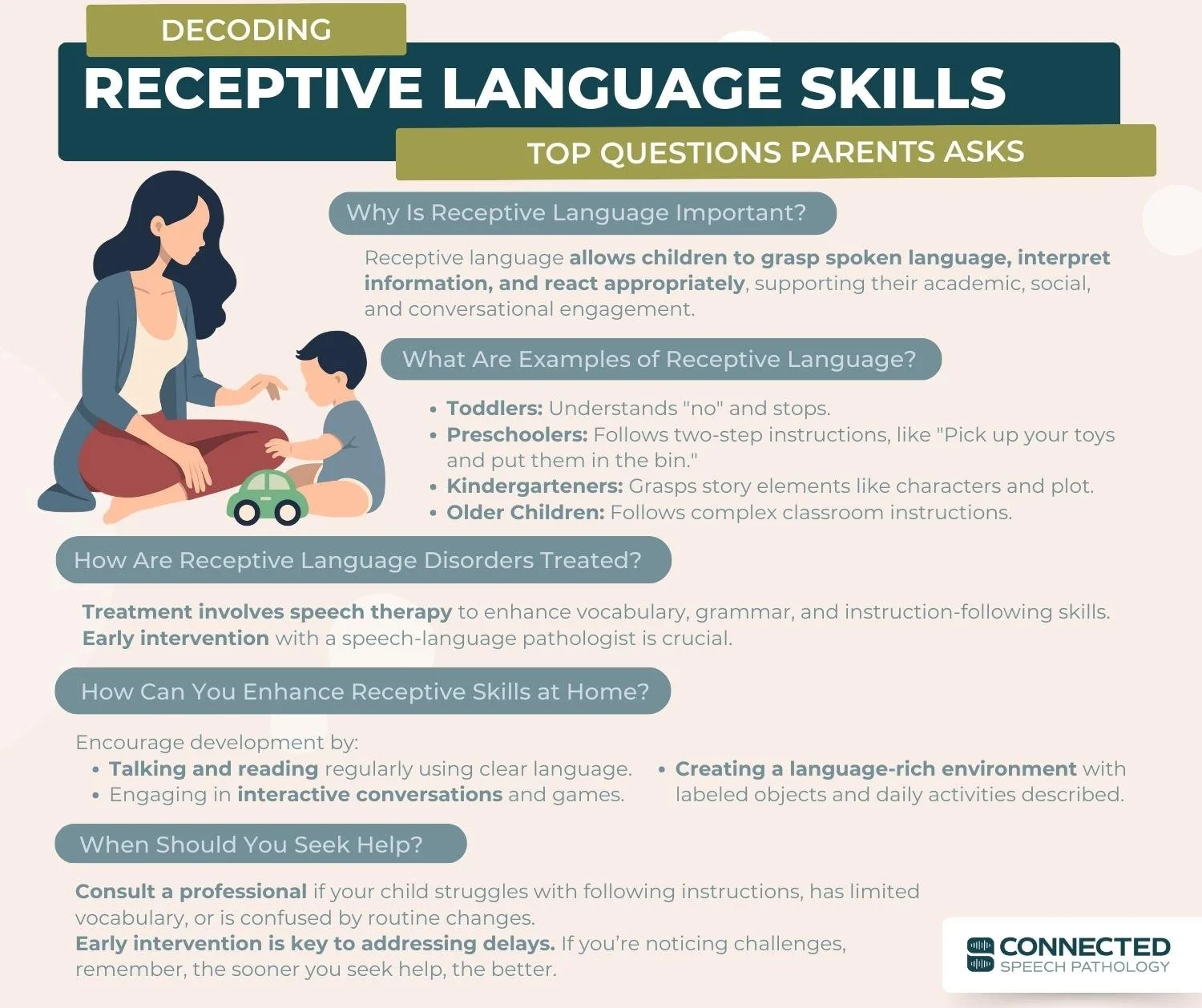
Speech therapy for receptive language focuses on helping children understand spoken and written language, not just use words to speak. In everyday life, receptive language allows children to make sense of instructions, questions, and conversations. Because of this, strong receptive language skills are essential for learning, emotional development, and social interaction. When these skills are delayed, children may struggle at school or in social settings. As a result, early speech therapy support can play a vital role in helping children succeed.
What Is Receptive Language Development?
Receptive language is the ability to understand spoken and written language. In everyday life, these skills allow children to follow instructions, answer questions, and learn new concepts. Without strong understanding skills, communication and learning can become more challenging.
This includes:
-
Following directions
-
Understanding questions
-
Comprehending vocabulary and concepts
-
Processing information in daily routines
For children, receptive language is essential for learning in the classroom, participating in play, following routines, and building peer relationships.
Signs of Receptive Language Difficulties in Children
Language difficulties can look different depending on a child’s age and needs. Some children may struggle to follow instructions, some common signs may include:
-
Difficulty following instructions (especially multi-step directions)
-
Difficulty understanding questions
-
Limited or delayed responses to spoken language
-
Difficulty learning new words or concepts
-
Challenges with reading comprehension
If these signs are present, early support through speech therapy can make a meaningful difference.
Why Receptive Language Skills Are Important for Learning
Receptive language forms the foundation of communication and is a strong predictor of academic success. Without solid understanding skills:
-
Expressive language (talking and writing) may also be delayed
-
Learning new information becomes more difficult
-
Social interactions can feel confusing or overwhelming
-
Confidence and participation at school may be impacted
In short, if a child cannot fully understand language, every part of learning and communication becomes harder.
How Speech Therapy Supports Receptive Language Development
Speech pathologists are trained to assess and support receptive language skills that impact communication, learning, and daily functioning. Speech therapy focuses on helping children process, understand, and respond to language effectively.
Speech therapy for receptive language may include:
-
Teaching vocabulary in meaningful, real-life contexts
-
Improving understanding of sentence structure and grammar
-
Supporting children to follow one-, two-, and multi-step instructions
-
Using visual supports, gestures, repetition, and modelling to strengthen comprehension
Therapy is always individualised, engaging, and designed to support real-world communication.Speech therapy is often combined with strategies used in our
Early Language Development services to support children at different stages.
How Parents Can Support Receptive Language at Home
Parents, caregivers, and teachers play a powerful role in reinforcing receptive language skills outside of therapy sessions. Helpful strategies include:
-
Using clear, simple language
-
Breaking instructions into smaller, manageable steps
-
Repeating key information to support understanding
-
Using visual supports and gestures alongside spoken language
-
Encouraging children to ask questions when they are unsure
When therapy strategies are practised at home, children are more likely to make steady and lasting progress.
When to Seek Speech Therapy Support
If your child is struggling to understand language, follow instructions, or keep up with learning, speech therapy for receptive language can provide targeted support and guidance. Early intervention helps build strong foundations for communication, confidence, and lifelong learning.


📸
References
Ribeiro, C. D. C. et al. (2016). Receptive language and intellectual abilities in preterm children. Early Human Development, 99, 57–60.